ARSENAL 003// // PRIMARY SEPARATION: Nipper Classification & Deployment-Nippers
[PLAMOFORGE 3D LOG. Entry No. TOOL-GEAR-003-Nippers/Side Cutters]
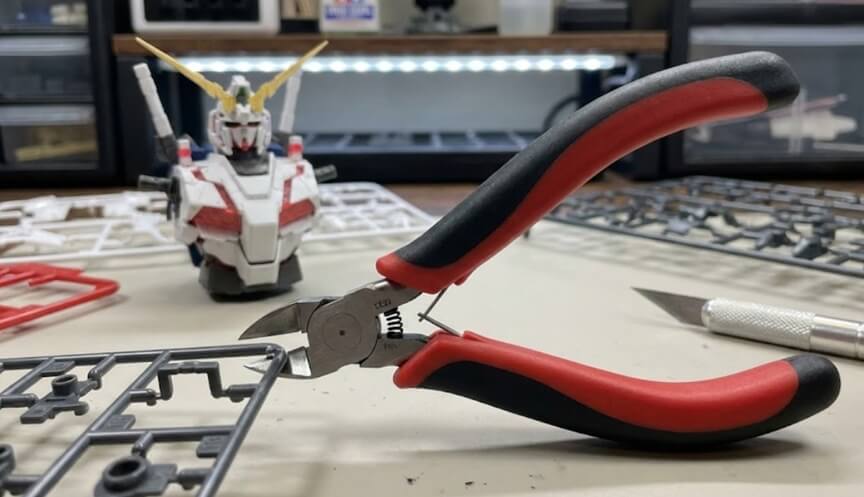
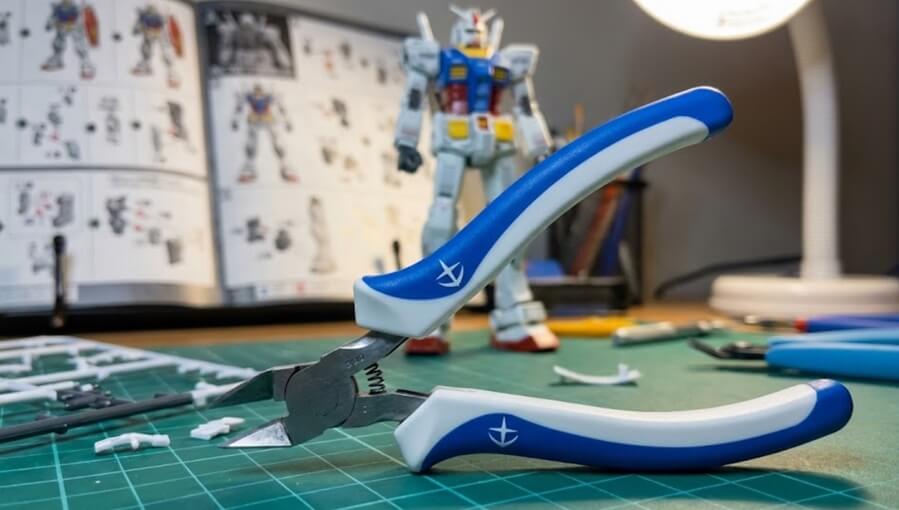
Within the workflow of Arsenal 003, Nippers (Side Cutters) are designated as “Primary Intervention Tools.” They serve as the initial means of liberating components from the runner. For units such as the MG, which features a massive part count and complex runner architectures, the performance of the nipper directly dictates the physical stress state at the base of each component.
This protocol is designed to guide operators in identifying different grades of nippers and executing the standard “Two-Stage Extraction” tactic.
DATA FILE 01: Blade Architecture — Single-Blade vs. Double-Blade
In the PLAMOFORGE 3D standard archives, nippers are classified into two distinct engineering designs:
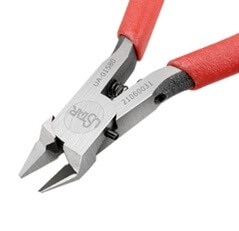
- Single-Blade “Guillotine” Design:
- Mechanism of Action: Features an ultra-thin sharp blade on one side and a flat, blunt anvil on the other. During the cut, the blade descends like a guillotine.
- Tactical Advantage: Drastically reduces compressive stress on the plastic, minimizing “Stress Whitening” to the absolute limit. This is the only recommended choice for high-precision external armor components.
- Limitations: Structurally delicate. Restricted to processing PS or ABS plastics under 3mm. Never use on clear parts or thick runner frames.
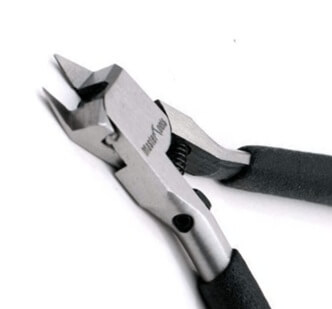
- Double-Blade “Wedge” Design:
- Mechanism of Action: Two sharp edges compress simultaneously toward the center.
- Tactical Advantage: Robust structural integrity and high durability.
- Application Scenarios: Handling thick runner frames, transparent components, or initial “Rough Cutting.”
DATA FILE 02: Metallurgy & Geometric Precision
High-efficiency Arsenal operations require a precise grasp of tool specifications:
- Hardness: Premium nippers typically utilize high-carbon steel (rated at 60-65 HRC). Higher hardness allows the edge to remain sharp for extended durations but increases the risk of brittle fracture if misused.
- Tapered Thinning: Ultra-thin blade profiles allow operators to reach deep into the dense part clearances characteristic of the MG. If a blade is too thick, forcing it into a gap will generate lateral force, resulting in “pitting” or gouging on the part surface.
DATA FILE 03: Tactical Cutting Protocol — The Two-Stage Method
To ensure atomic-level flatness on component surfaces, all operators must execute [PROTOCOL 002]:
- Stage One: Primary Relieving Cut: Utilize a double-blade or standard-grade nipper to cut the gate at a distance of 2mm to 5mm from the part. This releases the overall tension of the runner frame, preventing torsion during the final cut.
- Stage Two: Secondary Precision Flush Cut: Switch to a single-blade precision nipper. Place the blade flat against the part surface (or leave a 0.2mm redundancy) and close the handles slowly.
- Note: The closing speed must be steady; “explosive” force increases instantaneous stress and heightens the risk of whitening.
MAINTENANCE LOG: Lubrication & Calibration
To prevent the failure of core Arsenal 003 equipment, the following maintenance must be performed:
- Anti-Oxidation Protocol: After every session, the blades must be coated with anti-rust oil. High-carbon steel is extremely sensitive to ambient humidity.
- Limit Screw Calibration: Regularly inspect the limit screw on single-blade nippers. Over-closure will cause the sharp edge to strike the blunt anvil, resulting in instantaneous tool destruction.
- Prohibition of Lateral Torque: Never twist the nipper during the cutting process.
PLAMOFORGE 3D FINAL DISPOSITION
For operators currently constructing the MG, we recommend the following dual-tool deployment:
Projected Outcome: Total elimination of part whitening and a reduction of subsequent sanding workload by over 60%.
Primary Deployment: One Ultimate Nipper (for Stage Two Precision Cuts).
Logistics Deployment: One entry-level double-blade nipper (for Stage One Rough Cuts and transparent parts).
[END ARSENAL 003]